Properties We Power
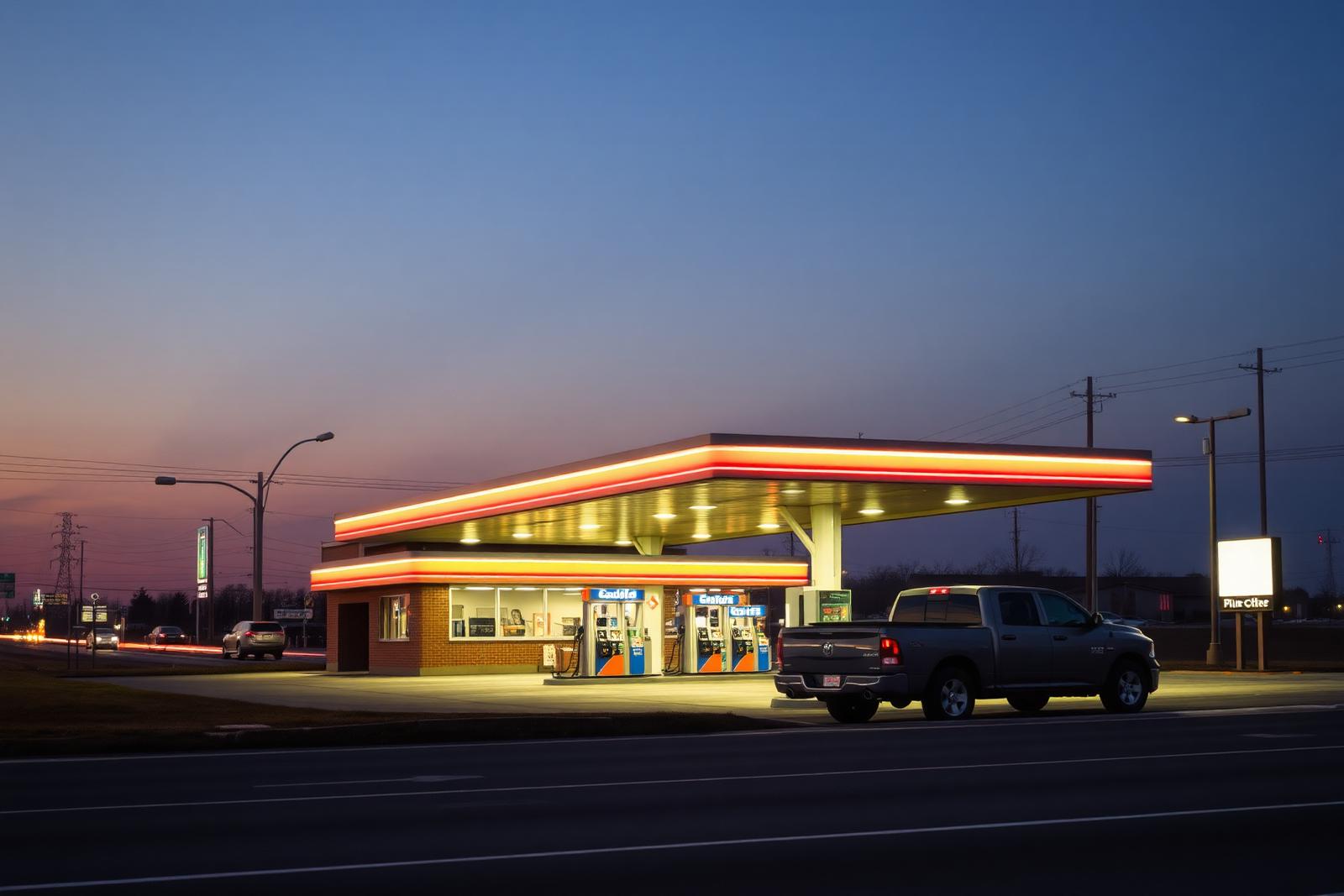
DC Fast Charging for Fuel Stations and Travel Centers
Fuel retail already owns the right real estate: visible, easy in and out, and built around convenience sales. Adding high power charging protects that traffic as the fleet mix changes.
Why it works at gas stations & truck stops
- High power charging keeps corridor drivers stopping at your site.
- Charging sessions of 20 to 30 minutes drive in store convenience sales.
- Retrofits phased so pumps and the store stay open during construction.
- Switchgear, transformer, and utility service work handled by our team.
- Dynamic pricing and payment options built into the QCharge platform.
What it costs
High-power DC installations are driven by service capacity. Hardware runs roughly $40,000 to $150,000 per unit, and transformer, switchgear and utility interconnect work can match it at sites without three-phase headroom.
Project timeline
Utility service is the long pole. Expect three to six months at most sites, with the store and pumps staying open through phased construction.
Common questions
- Do we need a service upgrade for DC fast charging?
- Often yes, though battery storage can buffer high-power sessions off a smaller service and cut demand charges at the same time. We model both options before recommending a design.
- How do drivers pay?
- QCharge POS supports chip, contactless, QR and mobile wallet payments, with dynamic pricing and loyalty integration if you run a rewards program.
- Can pumps stay open during installation?
- Yes. We sequence trenching and stall work so fueling positions and the store remain operational throughout.
What we typically install
- Q-DCFC-W Series 150 kW to 360 kW with optional marketing display
- Battery storage to reduce demand charges at high power sites
- QCharge POS for chip, contactless, QR, and mobile wallet payments
Incentives
Corridor sites are strong candidates for NEVI and CFI funding alongside the 30% federal credit in qualifying tracts.